A Legend Born of the Soil
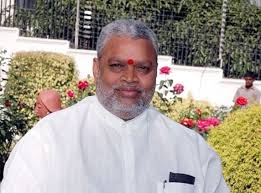
In the grand theater of Indian democracy, certain voices resonate long after the speakers have left the stage. They are the voices of the marginalized, the whispers of the rural hinterlands that grow into a thunderous roar within the hallowed halls of Parliament. One such voice belonged to Kinjarapu Yerran Naidu. Born on February 23, 1957, in the sun-drenched, red-soiled village of Nimmada in Srikakulam district, Yerran Naidu’s life was an odyssey of social justice.
To understand the man, one must understand the soil he came from. Srikakulam, often referred to as the ‘North Andhra’ frontier, has historically been a land of struggle and resilience. It was this landscape that molded a young boy from a modest agrarian family into a giant of national politics. Today, as we celebrate his 69th Birth Anniversary, we don’t just look back at his career; we analyze the DNA of a movement he helped catalyze.
The Meteoric Rise of a Grassroots Leader
Yerran Naidu’s political journey began not in the air-conditioned rooms of Delhi, but in the dusty lanes of Srikakulam. His academic brilliance led him to earn a degree in law, a tool he would later use to dismantle the systemic barriers facing the Other Backward Classes (OBCs).
At the age of 25, when most youths are finding their footing, Yerran Naidu was elected to the Andhra Pradesh Legislative Assembly in 1983. He was part of the political earthquake led by N.T. Rama Rao, but Naidu quickly established his own identity. He was elected four times to the Assembly, proving that his connection with the people was not a wave, but a deep-rooted bond. His early days were marked by an obsession with rural development—ensuring that the last man in the last village had access to water, roads, and dignity.
The Architect of the Rural Revolution
In 1996, at the age of 39, Yerran Naidu made his debut in national politics, being elected to the 11th Lok Sabha. His impact was immediate. Recognizing his talent and his deep understanding of the Indian heartland, he was appointed the Union Minister for Rural Development and Employment.
During his tenure, he became the face of a new rural India. He understood that India’s growth could not be measured by the skylines of Mumbai or Delhi, but by the stability of its villages. He pioneered schemes that linked rural connectivity with economic empowerment. His office was never a fortress; it was a sanctuary for the common man. It was during this period that he earned the moniker “Erranna” (Elder Brother)—a title that transcended political affiliations.
The Sentinel of OBC Rights in Parliament
If there is one arena where Yerran Naidu’s legacy is carved in stone, it is his role as the Chairman of the Parliamentary Committee on the Welfare of Other Backward Classes. This was not just a title for him; it was a sacred duty.
The post-Mandal era was a turbulent time in Indian politics. While the Mandal Commission’s recommendations were officially accepted, their implementation was fraught with bureaucratic hurdles and institutional resistance. Yerran Naidu became the sentinel of these rights. He used his legal acumen to challenge the status quo.
- The Struggle Against the ‘Creamy Layer’: Naidu was one of the first to argue that the ‘Creamy Layer’ criteria were being used as a tool to exclude deserving OBC candidates from higher education and top-tier government jobs. He fought for the upward revision of income limits, ensuring that the fruits of reservation reached those who were truly being held back by social stagnancy.
- Institutional Representation: He thundered in the Lok Sabha about the lack of OBC representation in the judiciary, the diplomatic corps, and the upper echelons of the bureaucracy. He didn’t just ask for quotas; he asked for a seat at the table of power.
The Bridge Between North and South
One of Yerran Naidu’s greatest achievements was his ability to unify the diverse Bahujan voices across India. National politics in the 90s was often divided by a linguistic and cultural chasm between the North and the South. Naidu bridged this gap.
He was the quintessential “Delhi Telugu.” He spoke the language of the people, whether in Telugu or Hindi, with an authenticity that commanded respect from veterans like Mulayam Singh Yadav, Lalu Prasad Yadav, and Sharad Pawar. He proved that an OBC leader from Andhra Pradesh could be a pivotal player in the coalition eras of the United Front and later the NDA. He was a diplomat of social justice, building alliances that ensured the OBC agenda remained at the center of national discourse.
The Legendary Hospitality of the Nimmada Lion
No biography of Yerran Naidu is complete without a mention of his residence at 9, Ashoka Road in Delhi. It was not a government bungalow; it was a “Langar of Love.”
For nearly two decades, this house was the first stop for anyone traveling from the South to the national capital. Journalists, students, distressed farmers, and fellow politicians were all treated to the same legendary Srikakulam hospitality. Yerran Naidu was known to sit with visitors, listening to their problems over a hot meal, often intervening personally with various ministries to solve a village-level grievance. He was a Union Minister who remained a village sarpanch at heart.
A Life Cut Short, A Legacy Left Behind
The tragic car accident on November 2, 2012, didn’t just claim a life; it silenced a roar that had protected millions. The outpouring of grief across the country was a testament to his impact. From the Prime Minister to the street vendor in Srikakulam, the sense of loss was universal.
However, a leader’s true success is measured by the continuity of his ideals. Yerran Naidu left behind a blueprint for the next generation of Bahujan leaders. He taught us that:
- Integrity is non-negotiable: In an era of scams, his record remained spotless.
- Education is the ultimate equalizer: He spent his life advocating for the intellectual empowerment of the OBCs.
- Unity is strength: He showed that when the OBCs, SCs, and STs stand together, the foundations of the elite-driven system shake.
The Phoenix – Rammohan Naidu
The greatest tribute to Yerran Naidu today is the rise of his son, Kinjarapu Rammohan Naidu. Taking the mantle at a young age, Rammohan Naidu has navigated the treacherous waters of politics with the same grace and grit as his father.
As the Union Minister for Civil Aviation, Rammohan Naidu is not just flying high on his own merit; he is carrying the weight of his father’s unfulfilled dreams. When he speaks in Parliament, one hears the echoes of the “Erranna” roar. He has become the modern face of the OBC movement—articulate, tech-savvy, yet deeply connected to the grassroots.
To Rammohan Naidu, we say: Your father’s legacy is your compass. The millions who looked to him for hope now look to you. You are the custodian of a flame that must never go out.
The Eternal Sentinel
As we turn the pages of this special edition of OBC Today, we realize that Yerran Naidu is not a figure of the past. He is a constant presence in every struggle for reservation, in every demand for a caste census, and in every fight for rural dignity.
He was the man who taught a billion people that their background is not their limitation, but their launchpad. He was the lion who reminded the citadels of power that the real India lives in the sweat of the farmer and the craft of the artisan.
Johar Kinjarapu Yerran Naidu! Your journey continues through us. Your roar echoes in our pens. Your vision is our mission.
-Purushotham Naragouni