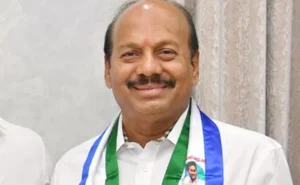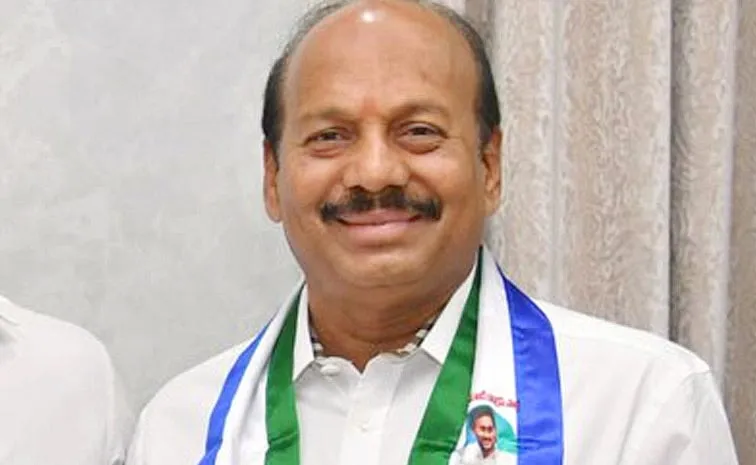
Rajya Sabha member Meda Raghunatha Reddy bypasses bureaucratic delays to turn central allocations into concrete civic assets for rural communities across the state.
Public infrastructure development requires more than just the allocation of central budgets it demands active administrative oversight and consistent follow up. Translating government funds into tangible community assets is a complex process that tests the administrative capabilities of elected representatives. In this crucial aspect of public service YSRCP Rajya Sabha member Meda Raghunatha Reddy has established a strong record of civic accountability in Andhra Pradesh.
According to official government statistics detailing the Member of Parliament Local Area Development Scheme Reddy has successfully utilised 8.13 crore rupees out of his total available allocation of 14.70 crore rupees. By spending over fifty five percent of his available funds the opposition parliamentarian has demonstrated a highly effective approach to local area development.
The Member of Parliament Local Area Development Scheme is a vital mechanism for grassroots infrastructure creation. Introduced in December 1993 during the tenure of Prime Minister PV Narasimha Rao the scheme was designed to empower parliamentarians to recommend and execute essential civic projects outside the regular departmental budgets. Members of Parliament receive an annual allocation of five crore rupees. They are expected to prioritise durable community assets such as drinking water facilities primary education infrastructure public health centres sanitation projects and local transport networks.
The administrative rules governing these funds are distinct for members of the upper house. While Lok Sabha members must recommend works strictly within their specific geographic constituencies Rajya Sabha members like Reddy possess the flexibility to recommend projects anywhere within the state they represent. While this flexibility offers a broader scope for development it also requires a highly proactive approach. The parliamentarian must identify pressing local needs across multiple districts secure administrative clearances from various district collectors and ensure that contractors complete the work on time.
Reddys high expenditure rate indicates a structured and persistent effort to navigate the bureaucratic processes that often stall public works at the district level. Getting a project from the proposal stage to final execution involves complex tender processes technical evaluations and continuous coordination between state and central departments. Successfully managing over eight crore rupees in public works proves that these administrative hurdles can be overcome with rigorous monitoring.
Meda Raghunatha Reddy brings a distinct and practical background to his legislative role. Born in 1965 in Chennayyagaripalle village of Nandalur mandal in Kadapa district to Meda Ramakrishna Reddy and Lakshminarasamma he steadily built a successful career in business and infrastructure before entering the upper house. After completing his degree in Tangutur he established himself as a prominent figure in public life. The YSRCP nominated him to the Rajya Sabha in February 2024 and he officially assumed office in April 2024.
His extensive corporate background likely contributes to his practical approach toward fund management and project execution. Managing large scale civic works across various districts requires the kind of logistical oversight and administrative coordination that is deeply ingrained in the business sector. Instead of merely submitting project recommendations on paper and waiting for bureaucratic approvals his record suggests an active involvement in tracking files and ensuring compliance at every stage of the development cycle.
For the people of Andhra Pradesh the successful deployment of these funds represents a direct improvement in their daily lives. It means the difference between a proposed project on a government ledger and a functioning drinking water plant a newly paved village road or a secure community hall. As rural and urban areas alike grapple with evolving developmental challenges the effective use of central funds remains a critical responsibility for every elected representative.
The Member of Parliament Local Area Development Scheme provides lawmakers with direct discretionary power to shape their local environments. When a representative actively uses these funds the allocated budget becomes a permanent public asset. Reddys administrative record serves as a clear example of how political office can be leveraged to ensure that every available rupee is put to work on the ground ultimately serving the immediate infrastructural needs of the state.